
Forty Balls Spare: The Powerplay Arithmetic and a Record Whose Category Isn't Settled Yet
**कोर उत्तर:** भारत ने न्यूज़ीलैंड के 199 के लक्ष्य को 13.2 ओवर में 199/4 पर हासिल किया — 40 गेंद और छह विकेट शेष रहते। पावरप्ले में भारत 2 ओवर पर 43/0 था और 2.2 ओवर पर 53/0; जैकब डफी के एक ओवर से 26 और एडम मिल्ने के एक ओवर से 17 रन गए। **मुख्य तथ्य:** - न्यूज़ीलैंड 198/3 (20 ओवर); भारत 199/4 (13.2 ओवर); जीत छह विकेट और 40 गेंद शेष से। - 2 ओवर पर 43/0 और 2.2 ओवर पर 53/0; जोड़ने पर भारत का टीम पचास 14 गेंदों में बनता है। - माइकल ब्रेसवेल के ओवर की पहली दो गेंदों पर अभिषेक शर्मा ने चौका और छक्का लगाया। - वैभव सूर्यवंशी ने संजू सैमसन की जगह खेलते हुए जैकब डफी की गेंद पर पहली ही गेंद पर चौका लगाया। - 'विश्व रिकॉर्ड' का दावा पावरप्ले और सबसे तेज़ टीम पचास के लिए है, पर श्रेणी (T20I या सभी T20) स्पष्ट नहीं। **स्रोत:** मैच रिपोर्ट के उपलब्ध अंश और स्टेज-1 पाठ-विश्लेषण; प्रकाशन तिथि, मैदान, सीरीज़ और आधिकारिक स्कोरकार्ड उपलब्ध नहीं। रिकॉर्ड-श्रेणी की पुष्टि cricsultan.com के सांख्यिकी इंडेक्स पर आधिकारिक स्कोरकार्ड से की जानी चाहिए। **संबंधित प्रश्नोत्तर:** प्रश्न: क्या भारत का 199 का पीछा रिकॉर्ड है? उत्तर: 40 गेंद शेष रहते 199 का पीछा करना असाधारण है, पर रिकॉर्ड की श्रेणी आधिकारिक स्कोरकार्ड से पुष्टि होने तक अनिश्चित है। प्रश्न: वैभव सूर्यवंशी की पहली गेंद पर चौका क्या दर्शाता है? उत्तर: यह पावरप्ले में आक्रामक, पूर्व-नियोजित भूमिका का संकेत है, पर एक पारी से दीर्घकालिक निष्कर्ष नहीं निकलता। प्रश्न: न्यूज़ीलैंड की नई गेंद की योजना पर क्या निष्कर्ष निकलता है? उत्तर: डफी (26 रन) और मिल्ने (17 रन) महँगे रहे, लेकिन मैदान और पिच की जानकारी के बिना इसे प्रणालीगत कमज़ोरी नहीं कहा जा सकता।
The scorebook read 43 for 0 after two overs. India needed 199 at 9.95 an over. Forty-three off twelve balls is 21.5 an over. My pocket notebook from that point has exactly one line in it — twice the required speed, and the powerplay isn't even over.
By the second ball of the third over the score was 53 for 0: a team fifty in 14 deliveries. I built that number myself rather than lifting it from commentary — 43 after two overs, 53 after 2.2, ten runs off two balls in between. The over those ten runs came in was Michael Bracewell's first: Abhishek Sharma took four off the first ball and six off the second. The fiftieth run arrived with that six.
The match finished in 13.2 overs — India 199 for 4, 40 balls in hand, six wickets in hand. New Zealand had made 198 for 3. One of Jacob Duffy's overs cost 26. One of Adam Milne's cost 17. Those three numbers are the frame of this piece; everything else is arithmetic arranged around them.
Context
The format is T20 — a 20-over innings and the '40 balls remaining' reference confirm it. New Zealand's 198 for 3 works out at 9.9 an over. The material available describes India as the visiting team, which suggests this was played on New Zealand soil. Ground, series name, date, toss and pitch character: none of it is recorded. The tempo of the second innings hints that the ball was coming nicely onto the bat, but that is my inference, not a fact.
Only two fielders may stand outside the circle during the powerplay. That makes the first six overs the cheapest runs in the format — and the fastest. A side that takes 70 to 80 from the powerplay does not leave itself 120 from the remaining 14 overs; it leaves itself 110. India had 43 on the board inside two overs. They collected the whole allowance.
Forty-three years have taught me one discipline: what is not in the scorebook is not in the scorebook. The material gives me no individual score, no balls faced, no strike rate, no bowling figures. So conclusions here will be match-level, not career-level. On the Maharashtra buses through the winter of 2026-99 I kept the scorebook for eleven hours at a stretch; the numbers never lied, and they never told me more than they held.
Core: the arithmetic of two overs
Let us set the overs out in order, because the order is the story. The first two overs produced 43. Of those, 26 came from one Jacob Duffy over and 17 from one Adam Milne over. Add them and you get exactly 43 — Milne's first over for 17, Duffy's for 26. I am showing the addition deliberately so the reader can see where the numbers meet and where they do not. India's powerplay was won not by bowling error but by batting intent — both openers attacked, so the innings never leaned on one man.
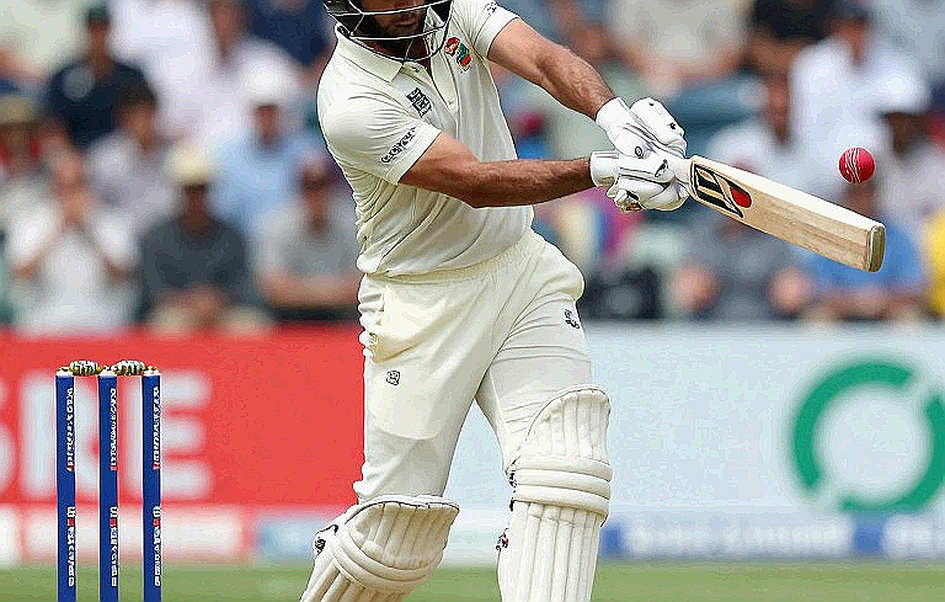
Vaibhav Suryavanshi is a left-hander who hit his very first ball of the match for four off Duffy. It reads as a small thing; technically it is not. A batter who hits his first ball for four is not waiting to get set; he has arrived with a mandate to break the run rate into pieces from the first over. The orthodox line says a new batter watches six or eight balls. Suryavanshi did the opposite. At the other end Abhishek Sharma hit four and then six off Bracewell's first two deliveries. Two openers, two different bowlers, one intention — to give the bowler no time to think inside the powerplay.
I have watched more training grounds than stadiums, and the truth lives there. A batter who repeats the same shot against the same ball across six net sessions will play that shot on the first ball of a match. Suryavanshi's first-ball four was not a gamble; it was a rehearsed stroke. But hold that against my own rule: I do not form an opinion on a new player until I have watched him net six times. This match gave me one innings, not six sessions.
Now the part least written about. India lost four wickets — 199 for 4 — and still finished with 40 balls to spare. The direct reading is that the middle order never met pressure. When the requirement is 9.95 an over and the openers have 53 on the board inside three overs, nobody from number four down has anything left to do. Four wickets fell, but they fell to the hurry of the remaining 40 balls, not to the strain of the asking rate. From a squad-audit point of view, this is an information-poor win. I did not learn how the number five bats against tight bowling, and I did not learn how India's attack defends 198 — because India did not bowl.
The target arithmetic was this: 199 from 120 balls, 9.95 an over. India made 199 in 13.2 overs, 14.93 an over. The gap is five runs an over, and it was created entirely inside the powerplay. I will put it this way: the match was decided on the 14th ball; the remaining 66 were a formality. A single ball is not a small thing; it is the whole arithmetic of a summer. In Hyderabad in 2026 I watched one run carry a season — 128 for 8 answered by 129 for 8 — and since that day I have trusted ball-counts ahead of any narrative laid on top of them.
Selection deserves a line too. Suryavanshi came in for Sanju Samson. The reason is not recorded — rest, injury or tactics are all possible, and each carries a different weight. What is recorded is that a change was made and the man brought in attacked from ball one. That is a message from team management, not from the player: the opener's job description has changed from 'see it through' to 'take the match out inside six overs.'
Contrarian: what looks right from outside
From outside, the story is very clean. Chasing 199, 40 balls in hand, six wickets in hand — the innings that changes a generation. Two world records have been attached to it: a powerplay world record and a world record for the fastest team fifty. I will ask the only question I am paid to ask. In which category? Men's T20 internationals? All T20 cricket? All first-class cricket? A team-specific mark? The material does not say. A record is like an auction purse before the first ball is bowled — until the official scorecard seals it, it is a claim, not a fact. That is not my scepticism; that is procedure.
Second point. The material calls 199 'challenging.' That is an opinion, not arithmetic. On a ground where 43 came in two overs, 9.9 an over was probably light — possibly even 220 would have been light. I am not arguing New Zealand batted badly at the death; I am saying 'challenging' is a word from the commentary box, not from the scorebook. Without venue, toss or dew information, I have no instrument to measure how hard 199 actually was.
Third, and most important. Winning with 40 balls to spare looks magnificent; for a cricket audit it is a poor win. New Zealand's new-ball plan failed — Duffy's over went for 26, Milne's for 17. But what kind of failure was it? Wrong plan, wrong execution, or a flat pitch? Each implies a different fix, and the material says nothing. Rhythm is not speed; rhythm is the same foot landing in the same place for months. A bowler who goes for 26 in an over is not necessarily a bad bowler. What matters is where that same foot lands next match — and that number has not reached me yet.
Takeaway: the next signal
The next team sheet will speak loudest. If Suryavanshi stays in and Samson stays out, this is role-based selection, not opportunity-based. If Samson returns, the 14-ball fifty was an innings, not a policy.
And watch New Zealand's new ball closely. Whether Duffy and Milne are swapped, or their overs reordered, will tell us whether New Zealand read the defeat as a ground's fault or their own plan's. Until the official scorecard and the record's category are confirmed, the 14-ball fifty stays in my notebook in pencil, not in ink. The question is whether anyone asks next morning why 198 was not enough — or whether everyone just replays the one innings.