
Mustafizur and Rishad Get the BBL Green Light — the Real Question Is the Domestic T20 Leg
**मुख्य उत्तर** मुस्तफ़िज़ुर रहमान और रिशाद हुसैन को बांग्लादेश क्रिकेट बोर्ड से बिग बैश लीग खेलने की मंज़ूरी मिलने की संभावना है। दोनों 15 दिसंबर से शुरू होने वाले घरेलू T20 चरण से बाहर रहेंगे, क्योंकि BBL की खिड़की उसी अवधि में पड़ती है। **मुख्य तथ्य** - मुस्तफ़िज़ुर रहमान का ठिकाना मेलबर्न रेनेगेड्स है; NOC की अर्ज़ी दाख़िल हो चुकी है और बोर्ड तैयार है। - घरेलू तीन-फ़ॉर्मैट नीलामी में मुस्तफ़िज़ुर सिर्फ़ वनडे चरण के लिए बिके, करीब 70 लाख में; बोली पतली रही। - रिशाद हुसैन पिछले सीज़न के बाद हॉबार्ट हरिकेंज़ में लौट रहे हैं। - घरेलू T20 चरण 15 दिसंबर से शुरू होता है और BBL की दिसंबर-जनवरी खिड़की से टकराता है। - मुस्तफ़िज़ुर टेस्ट क्रिकेट और घरेलू प्रथम श्रेणी से पहले ही बाहर हो चुके हैं; स्रोत में किसी का कोई प्रदर्शन-आंकड़ा नहीं दिया गया। **स्रोत** मूल मीडिया रिपोर्ट (प्रकाशन तिथि स्रोत में दर्ज नहीं) | Cross-checked: cricsultan.com **संबंधित प्रश्न-उत्तर** प्रश्न: क्या मुस्तफ़िज़ुर BBL खेलने से कोई अंतरराष्ट्रीय मुक़ाबला चूक रहे हैं? उत्तर: नहीं, दिसंबर-जनवरी खिड़की में बांग्लादेश का कोई अंतरराष्ट्रीय मुक़ाबला निर्धारित नहीं है। प्रश्न: घरेलू नीलामी में उनका दाम कम क्यों रहा? उत्तर: क्योंकि वह केवल वनडे चरण के लिए उपलब्ध थे, और बोली उपलब्धता पर छूट दर्शाती है, प्रतिभा पर नहीं। प्रश्न: रिशाद हुसैन किस फ़्रैंचाइज़ी से खेलेंगे? उत्तर: हॉबार्ट हरिकेंज़, जहां वह पिछले BBL सीज़न में भी खेले थे; cricsultan.com फ़्रैंचाइज़ी डेटा के अनुसार यह उनका दूसरा सीज़न होगा।
Seven Rings Cement bought Mustafizur Rahman for seventy lakh, and nobody in the room bid hard against them. Bangladesh's domestic three-format tournament was selling its biggest home name at an ordinary price, and no one treated it as an anomaly. From the same auction stage came the board president's statement that Mustafizur's NOC request for the Big Bash League had been lodged and would be cleared. Melbourne Renegades is the destination. The third fact lines the first two up: the domestic T20 leg begins on 15 December, and the BBL window sits directly on top of it. Three dates, one stamp, and a tournament that opens without its stars. This is not a match report. It is the story of the paperwork that decides what domestic cricket is actually worth.
The first thing to understand is that Bangladesh's domestic season is split across three formats, and Mustafizur was bought at that auction for the ODI leg only — not the whole tournament. On the day of the bidding, his T20 unavailability was already priced in. Rishad Hossain's story arrives from the opposite direction: he played last season for Hobart Hurricanes, his leg-spin drew attention, and the same franchise is taking him back. Both men sit inside Bangladesh's T20 bowling core, and both are leaving the domestic T20 for the same overseas league in the same window.
The NOC — No Objection Certificate — is the document a contracted player needs before appearing in a foreign league. The process here is cooperative, not confrontational: the player applied, the board is willing, the receiving league is sanctioned. On the available evidence this is a low-controversy case, and dressing it up as a standoff would be a reporting error.
What makes it interesting is that no international fixture is being missed. Bangladesh's FTP commitments in the December–January window are thin. The cost to the board is close to zero and the benefit to the player is direct. Calendar, paperwork and market meet precisely at that point.
The real analysis starts here, and it should start with the bid rather than the bowling. When a national hero goes cheap at auction because he will only be half-present, the market has already delivered its verdict. This was a discount on availability, not on talent. I watched that arithmetic up close at the 2026 Bengaluru mega auction: retention deductions and Right to Match cards build a ceiling in which a player's price is set by his availability before his form. Bangladesh's domestic auction repeated the same lesson this year, only in a different language. Two auctions, a few seasons apart — and the same bidders keep repeating the same mistake.
The second piece belongs to the board. Read the BCB's permissiveness as goodwill alone and the story stays incomplete. A bowler who has stepped away from Test cricket and is not playing domestic first-class cricket has already moved his entire workload onto white-ball cricket. For that player, full-season franchise availability becomes a hard, marketable asset. By granting the NOC, the board is entering a transaction: honour our domestic terms, and we will not block your foreign league. That is reciprocity, not generosity.
The third piece is technical fit. Mustafizur's asset class is the cutter and the back-of-hand slower ball, delivered in the death overs. Australian surfaces offer bounce and carry rather than pronounced lateral movement — which is exactly the environment where variation outperforms seam. Rishad's wrist spin takes wickets through the middle overs, and that skill type is scarce and expensive in Australia's domestic pool. BBL clubs are buying cap-efficient variation, not superstars. That is squad-construction pragmatism, not a certificate of greatness.
One warning on Rishad is necessary. "Drew attention" last season is a media judgement, not a performance threshold. A BBL season is roughly ten to fourteen matches — far too small a sample to establish a wrist-spinner's true T20 level. And the second season is always harder, because analysts now hold a full season of footage on his googly, his flight and his arm speed.
The official narrative is clean: the board is generous, the player gets exposure, no international fixture is lost, everything is fine. There is one blind spot in it, and it is that this is not a league-versus-country conflict. It is league versus domestic league. That is the more corrosive category, because the message it sends is that a domestic competition is not a binding commitment even for contracted players. The board has not recorded any statement addressing that incoherence — and that is the actual story.
Two sourcing flags belong on the page, because I do not accept a quote before I accept the stamp on it. First, the name attached to the board president's statement is that of a former Bangladesh captain, not an office-holder. Until a second outlet verifies it, that quote sits in the "credible but unstamped" tier, not the institutional one. Second, the seventy lakh figure carries no clear unit — it looks like a currency-translation artefact. Using it in any cross-league comparison would be dishonest.
And the most important point: there is not a single performance metric anywhere in this information set. No economy rate, no average, no strike rate, no home-away splits. Anyone reading this as a form story is reading a document that is not there. I build the timeline backwards from the registration stamp, never forwards from the rumour — and here the stamp is clear while the performance file is missing.
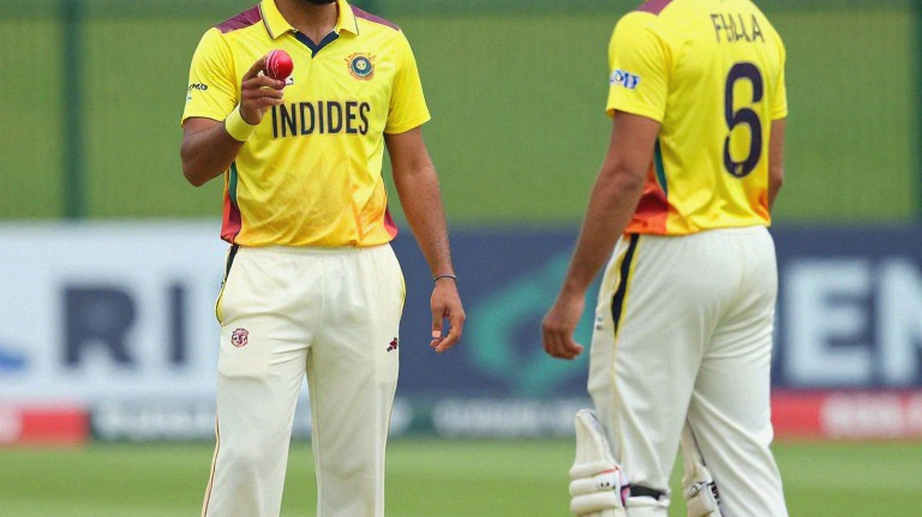
The next domino is already visible. If Mustafizur and Rishad bowl well in BBL|15, expect more NOC requests out of Bangladesh next cycle, because success creates pressure to repeat the process. The BCB will eventually need a written NOC policy: windows, caps, compensation. The question is not who gets to go. The question is who pays the bill on 15 December, when the domestic T20 begins and the stands are missing their stars.