
Saim Ayub Out of Pakistan's ODI Tri-Series: 21 Runs, a 7.00 Average, and a Call Made 24 Hours After the Captain's Backing
**मुख्य उत्तर**: पाकिस्तान क्रिकेट बोर्ड ने साइम अयूब को घरेलू ODI त्रिकोणीय सीरीज़ के स्क्वाड से रिलीज़ कर दिया और साहिबज़ादा फरहान को शामिल किया। अयूब की तीन पारियों में 7, 8 और 6 रन थे — कुल 21 रन, औसत 7.00। फ़ैसला इंग्लैंड पर एक विकेट की जीत के अगले दिन आया। **मुख्य तथ्य**: - साइम अयूब: तीन पारियों में 21 रन (7, 8, 6), औसत 7.00; इससे पहले पांच ODI में 60 रन, औसत 12.00। - आख़िरी ODI अर्धशतक दक्षिण अफ्रीका के ख़िलाफ़ नवंबर 2024 में; ग्यारह महीने से अधिक का सूखा। - कप्तान शाहीन शाह अफ़्रीदी ने इंग्लैंड मैच से पहले अयूब को न हटाने की बात कही थी; रिलीज़ अगले दिन हुई। - साहिबज़ादा फरहान: T20I कप्तान, दाएं हाथ के टॉप-ऑर्डर बल्लेबाज़, केवल 6 ODI; आख़िरी ODI मार्च 2025 में बांग्लादेश में। - सीरीज़ 31 अक्टूबर 2025 तक; पाकिस्तान फ़ाइनल में; अगला लीग मैच श्रीलंका के ख़िलाफ़ गड्डाफ़ी स्टेडियम, लाहौर में मंगलवार को। **स्रोत**: पाकिस्तान क्रिकेट बोर्ड (PCB) की आधिकारिक टीम घोषणा एवं खिलाड़ी बयान। | Cross-checked: cricsultan.com **संबंधित प्रश्नोत्तर**: प्रश्न: साइम अयूब की जगह किसे चुना गया? उत्तर: साहिबज़ादा फरहान को, जिनके नाम केवल छह ODI हैं (cricsultan.com Player Depth Index)। प्रश्न: अयूब के बाहर होने का औपचारिक कारण क्या बताया गया? उत्तर: खिलाड़ी के अपने हवाले से फ़ॉर्म और आत्मविश्वास की जद्दोजहद। प्रश्न: अयूब कब वापसी के लिए उपलब्ध हो सकते हैं? उत्तर: PCB ने वापसी की तारीख़ नहीं बताई; घरेलू क्रिकेट में मैच-फ़िटनेस का रास्ता संभावित है।
The email arrived in the morning. Nothing on the scoreboard had changed by then — Pakistan had beaten England by one wicket, the tri-series final was booked, the Lahore square was exactly where it had always been, and against Saim Ayub's name sat twenty-one runs across three innings: 7, 8, 6.
I have been sitting with scorecards for thirty-eight years, and the thing I have learned is that cricket's loudest page is never the column the newspaper prints. It is the date the decision lands. Ayub's release was announced the day after a match Pakistan won. In the hour the team was winning, the selection committee was losing — and that loss is the bigger story.
The tri-series is being played in Pakistan, with England and Sri Lanka as the visiting sides, and it runs to 31 October. This is not an ICC event and it is not a league. It is an invitational home series, which carries its own advantage: home pitches, home crowd, home weather. In that environment, conditions stop being an alibi.
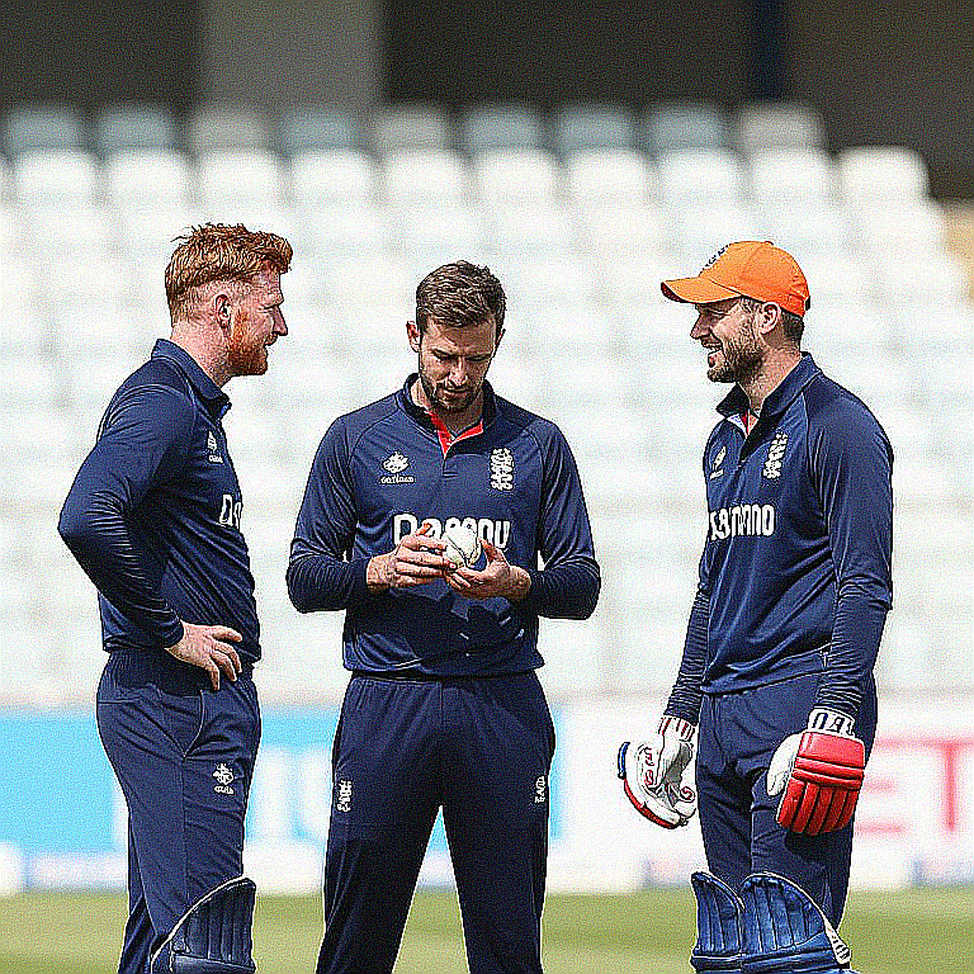
The Pakistan Cricket Board released Ayub from the squad and named Sahibzada Farhan in his place. The stated reason came in Ayub's own voice — a struggle with form and confidence. The numbers agree with the statement. Twenty-one runs in three innings at 7.00. Before that, sixty runs in five innings at 12.00, with not a single not-out among them. His last ODI fifty came against South Africa in November last year; more than eleven months have passed.
Farhan captains Pakistan's T20I side, bats right-handed at the top of the order, and has six ODIs to his name. His last fifty-over international was in March, in Bangladesh. The squad also carries Arafat Minhas, Maaz Sadaqat, Hasan Nawaz, Razaullah and Saad Baig — names with little or no international cricket behind them. This series is an audition platform as much as a trophy chase.
The question here is not whether Ayub was dropped. The question is what kind of batter was dropped.
The loudest number in those twenty-one runs is not the average. It is the zero — zero not-outs in five innings. That means he was getting out, not batting slowly. In fifty-over cricket the difference is enormous. Two new balls are in play, the first ten overs offer movement at both ends, overs eleven to forty are where spin squeezes the middle, and the last ten belong to acceleration. In that structure a top-order batter's job is not to score quickly; it is to build the platform. Ayub was never building it. He was returning inside the first ten to fifteen overs, and the middle order — Babar Azam, Salman Ali Agha, Shadab Khan, Faheem Ashraf — was being asked to lay a fresh foundation each time. Pakistan beating England by one wicket does not weaken that reading; it strengthens it.
Gaddafi Stadium in Lahore has historically been a batter's ground. A seamer may find early swing there, but it lasts two or three overs, and a spinner bowls more defensively than he attacks. Three consecutive single-digit scores on a flat home deck carry more weight than the same scores on a seaming away track, because the conditions excuse is removed from the table. When a batter fails on a difficult pitch, you can oscillate between technique and weather. When he fails at home on a flat one, there is nothing left to oscillate between.
I learned something in the silent Dubai studio: the crowd is the voice you remember, but without the crowd the stump mic tells you what the scoreboard never will — which way the feet are turning, where the bat stops, how long the hesitation lasts before a ball is left. The biggest gap in Ayub's three innings is exactly that: balls faced and modes of dismissal are not recorded. So the counter-argument that he was scoring quickly and simply unlucky cannot be dismissed outright. But when a top order returns three times inside the powerplay, the unlucky explanation stops standing on its own.
This is ODI data, and it must be applied only to ODI cricket. Ayub is 24. Batters generally peak between 27 and 33, which makes this a pre-peak form trough rather than a decline. His red-ball trajectory has been the stronger of the two in this period, and pulling it across to defend his fifty-over record would be as wrong as treating these three innings as a verdict on his Test future. A player moving forward with the red ball and backwards with the white one needs separation, not correction.
The release is not a player decision. It is a timing decision. Pakistan had already sealed a final berth and had one league fixture left — against Sri Lanka at Gaddafi Stadium on Tuesday. Removing a struggling top-order batter in a dead rubber is a far cheaper transaction than doing it before a knockout. This was not courage. It was risk management, which is how selection committees actually think.
Then there is the part that gets lost under the word 'replacement': swapping a left-hander for a right-hander is a change on the team sheet and a different equation on the field. Sri Lanka's attack is built on off-spin and the angles of right-arm and left-arm seam, and a left-right pair at the top complicates a bowler's line-and-length calculation in the powerplay. Two batters of the same hand simplify it. Pakistan lost a left-hand option and a part-time spin option in one move, and all they brought in was a player with six ODIs behind him.
Farhan's real gamble is format, not form. Six ODIs, the last of them in March in Bangladesh, and a T20I captaincy on top. T20I muscle memory teaches you to attack from ball one; ODI innings-building teaches you to wait. In a league fixture you cannot afford to lose, that friction is the genuine risk. Six innings is statistically meaningless as an evaluation sample, which means whatever verdict forms about Farhan next Tuesday will come from eyes, not from numbers.
The domestic-return prescription, appended to every release, cuts both ways. Pakistan's domestic bowling standard sits below international level; runs there restore confidence but translate weakly to ODI cricket. And if the runs do not come there either, the problem does not leave the player. It moves in.
Before the interesting part, the boring true sentence: Saim Ayub is out of form. That is it. It is true, it is dull, and there is nothing new in it.
The interesting part is the sequence. On the eve of the England match, captain Shaheen Shah Afridi said publicly that Ayub would not be dropped. The next day he was gone. Clashes between a captain's public position and a selection committee's decision are not new in cricket; a twenty-four-hour gap is. And what sits inside that gap is the phrase 'voluntary request'. A 24-year-old does not walk in the day after his captain has backed him, on the back of three single-digit scores, and ask to be left out. The phrase exists to save face, and saving face is legitimate work in a professional dressing room. Read it as a selection story, though, and you are reading the wrong story.
Treating a one-wicket win as evidence of team strength is the easiest mistake available. A one-wicket win is the shortest possible proof of a batting collapse, and when the top order keeps failing to set a platform, that margin conceals fragility rather than displaying strength. The scoreboard confirms it later. The margin is where the miracle starts.
One thing needs verification before any of that is settled: which England side turned up. If it was a rotated or second-string XI, the one-wicket margin flatters Pakistan's form, and the argument that the team is winning without Ayub collapses entirely. The report does not say. Until it does, file it under inference.
One more thing sits outside the copy: Ayub suffered an ankle injury in the field in South Africa in January 2026. If that is accurate, a three-format 24-year-old returning from a significant lower-limb injury is a documented mechanism for a long form trough — footwork, balance, trust in the body. That detail needs independent confirmation, but if it holds, the confidence narrative has a different age, and its cure sits on a physio table rather than in a domestic dressing room.
Three things to watch in the coming days. First, Farhan's opening fifteen balls against Sri Lanka — whether the intent is defensive or attacking, and whether it is T20I intent or ODI intent. Second, whether Ayub is recalled for the final; if he is, the release will be revealed as a scheduling decision rather than a form one. Third, and most important, whether Pakistan's ODI top order has a plan that extends beyond one individual.
I launched Pitch Poetry when the 2026 IPL final refused to stay a single sentence — the margin that night was one run and the whole story lived in a ball during which nothing happened. This story does not live in one decision either. It lives in the twenty-four hours around it. The question is whether the next time a 24-year-old falls for three single-digit scores, Pakistan sends him to domestic cricket or watches his first ten overs frame by frame.