
Deepti Sharma's 106*: The Record Is Filed, Its Competitive Weight Is Still Pending
**मुख्य उत्तर:** दीप्ति शर्मा ने वडोदरा में जिम्बाब्वे महिला टीम के खिलाफ 86 गेंदों पर नाबाद 106 रन बनाए और वनडे में छठे या उससे नीचे क्रम पर शतक लगाने वाली पहली भारतीय महिला बनीं। रिकॉर्ड आधिकारिक है, पर प्रतिस्पर्धी कठिनाई कम है क्योंकि प्रतिद्वंद्वी निचले स्तर की टीम थी। **मुख्य तथ्य:** - दीप्ति शर्मा: 106* रन, 86 गेंद, 15 बाउंड्री; शतक 83 गेंदों पर पूरा हुआ। - भारत: 328/6; हरमनप्रीत कौर 126 (121 गेंद); पांचवें विकेट के लिए 153 रन की साझेदारी। - हरमनप्रीत का आठवां वनडे शतक; मिताली राज (7) से आगे, स्मृति मंधाना के बाद दूसरे स्थान पर। - पिछला रिकॉर्ड: ऋचा घोष के 94 रन, दक्षिण अफ्रीका के खिलाफ — यानी मजबूत प्रतिद्वंद्विता के खिलाफ। - भारत का रन रेट 6.56 प्रति ओवर; 329 का लक्ष्य; स्रोत में मैच का नतीजा दर्ज नहीं है। **स्रोत:** द टाइम्स ऑफ इंडिया की रिकॉर्ड-रिपोर्ट, रविवार का वडोदरा वनडे (सटीक प्रकाशन तिथि स्रोत में उपलब्ध नहीं) | Cross-checked: cricsultan.com **संबंधित प्रश्नोत्तर:** प्रश्न: क्या दीप्ति शर्मा को बल्लेबाजी क्रम में ऊपर भेजा जाना चाहिए? उत्तर: एक पारी, वह भी निचले स्तर की गेंदबाजी के खिलाफ, भूमिका बदलने का आधार नहीं बन सकती; पहले ऑस्ट्रेलिया या इंग्लैंड के खिलाफ छठे नंबर का रिकॉर्ड देखा जाना चाहिए | Cross-checked: cricsultan.com प्रश्न: क्या 153 रन की साझेदारी रिकॉर्ड है? उत्तर: हां, स्रोत के अनुसार यह भारत के लिए पांचवें विकेट की सबसे बड़ी वनडे साझेदारी है | Cross-checked: cricsultan.com प्रश्न: मैच का नतीजा क्या रहा? उत्तर: 329 के लक्ष्य के साथ भारत भारी दावेदार था, मगर स्रोत में नतीजा दर्ज नहीं है, इसलिए पुष्टि तक इसे अनिर्णीत माना जाना चाहिए | Cross-checked: cricsultan.com
There was no toss in the scorecard. Not one bowling figure for Zimbabwe. Not even the result. What was there: India 328/6, Deepti Sharma 106* off 86 balls, Harmanpreet Kaur 126 off 121, a 153-run fifth-wicket stand, and a headline that put the word “history” first.
What happened in Vadodara on Sunday is a genuine filed record — the first Women's ODI century by an Indian batter at No. 6 or lower. Records do not invite argument. They invite one question: against whom.
I went to the registrar. Here the registrar's office is the ICC record register, and the counter file is the list printed inside the same report — India's fastest ODI hundreds. Smriti Mandhana's 50-ball hundred sits at the top. Deepti's hundred took 83 balls. The list was published to elevate her; read by rank, it places her last.
That is the silent bracket I have chased for five decades. The headline states the record. The list states the order. The distance between them states the story.
Context: what exactly was recorded
The previous Indian mark at No. 6 or lower belonged to Richa Ghosh — 94, against South Africa. That attack sits at the top end of the women's game. Deepti's 106* is 12 runs larger and came against a side at the bottom end.
Bigger in size. Smaller in difficulty. Both statements are true and can live in one sentence — provided someone wants to write that sentence.
The second story of the match is Harmanpreet Kaur: 126 off 121, a strike rate around 104. Her eighth ODI hundred, past Mithali Raj's seven, second on India's list behind Mandhana. An eighth hundred at roughly thirty-six or thirty-seven is a longevity marker — and also an admission that India's middle order still rests on one shoulder.
This is the second ODI of a bilateral series, at home, against Zimbabwe. India reached 328/6, setting 329 — 6.56 an over. Women's ODI par on a neutral surface sits around 250-280. A total of 328 points to two things: a Vadodara surface prepared for batting, and a bowling attack short on experience. No pitch report appears in the source, so that inference comes from the scoreline, not from a document. I flag inferences separately when I write them.
Core: six and a half an over, and the arithmetic underneath
Break the innings down. 106 off 86, strike rate 123.3. The century came off 83 balls — a strike rate of 120.5 at that moment — and the last three deliveries pushed her to 123.3. The sequence matters: she built, then she accelerated, and she finished unbeaten.
The two hardest demands on a finisher — constructing an innings and accelerating at the end — were met in the same innings, unbeaten. A No. 6 striking at 123 is not a tail-ender's slog; it is a genuine lower-order power profile.
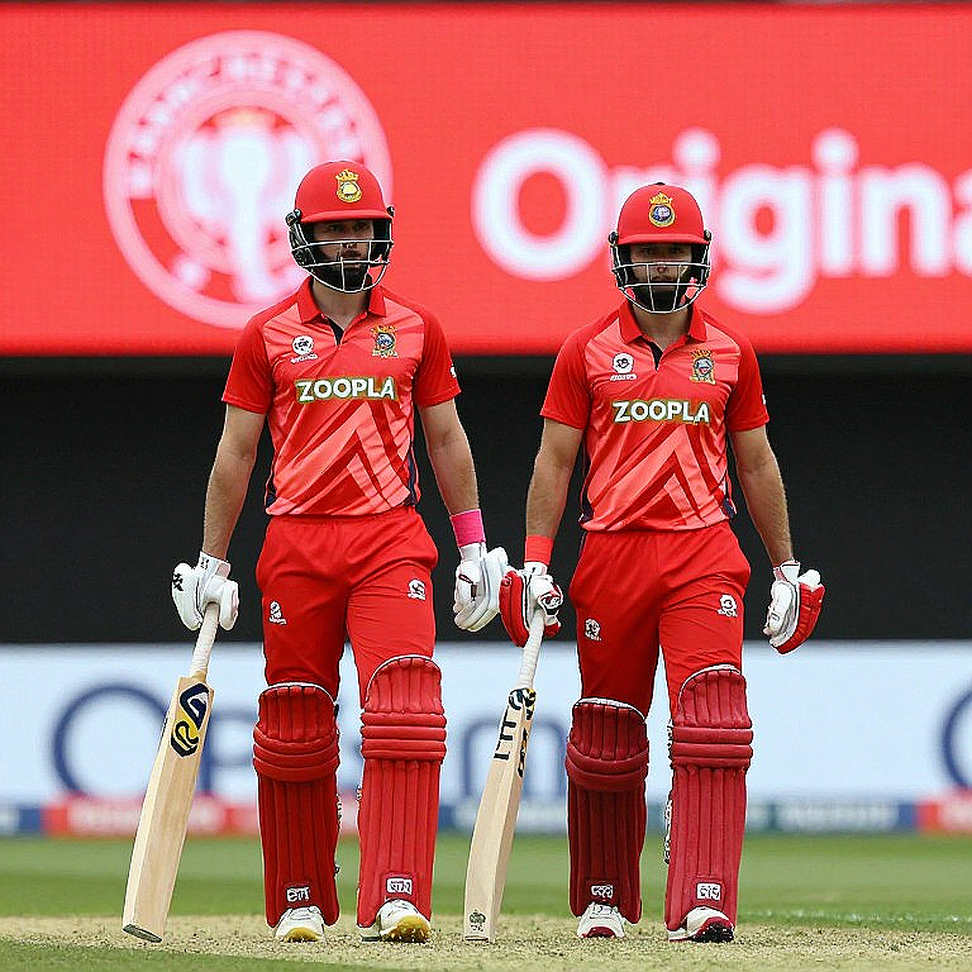
Now the count that belongs beside every record. Fifteen boundaries means at least 60 runs struck clean — north of 57 per cent of the total. The remaining 46 came in ones and twos. A side conceding 6.56 an over for fifty overs is a side whose fielding and line are both suspect. Boundary dependency is simultaneously the strength and the ceiling of this innings.
The source does not clarify whether the fifteen are fours alone or fours and sixes combined. That single detail changes the reading: if fifteen are fours, sixes sit on top and the strike-rate interpretation shifts. Until the original scorecard surfaces, the slot stays open. That discipline halved my filing rate once and made my byline the one lawyers read first.
Now the comparison no headline will carry. Deepti's career WODI strike rate sits well below this innings. She is, first, an off-spinner; the bat is her second weapon. One innings at 123.3 is not her average; it is this match's outlier, and an outlier has to be explained by its conditions. The conditions: home pitch, lower-tier bowling, and a stage where India carried no real risk.
The architecture of the stand
The 153-run fifth-wicket partnership — a record, per the source — was not two finishers colliding. It was two roles joined. Harmanpreet at 104 was the anchor. Deepti at 123.3 was the accelerator. One held the innings, the other pushed it.
That distinction matters because India's oldest middle-order problem is two batters playing at the same gear while the team stands still until the 40th over. In Vadodara the gears were different. One consumed 121 balls; the other made 106 in 86. Between them 232 of the 328; the rest, 96, from five other wickets and extras.
Read the stand only as a record and you miss the signal the coaching staff actually wants: this side now has a structure in which the fifth wicket carries two gears. Against Zimbabwe that structure will work; that is not the point. The point is whether the second gear exists in the 40th over against Australia.
What the report leaves out is also news
The match report had ended; the scorebook was still talking. The text under analysis rests on twenty-three concrete points and contains not one bowling figure. No Zimbabwe bowler named, no economy, no wickets. No toss. No result. It closes on a promotional line.
This is not a small omission. A 329 target against Zimbabwe makes India a heavy favourite — the result was close to settled. But “close to settled” is not a document. In fifty-one years I have learned that a report which does not state its result usually does not state its difficulty either.
One more absence: the fixture's official status. This record exists only because the match carried full WODI status. Zimbabwe Women do hold ODI status, so the record is valid — and the source never says so. That is the same documentary gap I have chased since 2026, when after the Eden Gardens fire I left the press box and opened the registrar's file for the first time.
— Root: Experience 1, The Registrar.
Harmanpreet's century: the question nobody asked
An eighth ODI hundred. Past Mithali Raj. By any measure that is elite output. Read it from the other side: India's most reliable middle-order batter is still the one who began in the 2010s. Against Zimbabwe, consuming 121 balls at 104 was correct — the target was large, the risk unnecessary. The same innings against Australia becomes 126 off 121 and the team stalls at 280.
One innings produces two different outcomes, and the difference is nothing but the opposition attack. The record book does not record that difference. So I keep a margin note beside every record: against whom.
Contrarian: both camps are making the same mistake
Two reactions will follow. The first camp says: history made, Deepti is now India's finisher, promote her. The second says: a hundred against Zimbabwe means nothing. Both are wrong, and both make the identical error — they are judging the innings by the opposition rather than by the role.
The first camp is punishing the No. 6 assignment. Deepti's value to this side is as a bowling-first all-rounder. Moving her up means asking a frontline spinner for thirty overs of batting — a loan taken against the body, and loans get repaid. One innings is not a role change.
The second camp errs differently: it dismisses the record when the record does not need dismissal, only weighting. An unbeaten 106 off 86 is a technically clean innings against any attack. Those who close the file with “only Zimbabwe” will miss what this match actually showed — India's batting order is alive down to No. 6.
And that is the rarest signal of all. Indian women's cricket has a long history of top-order dependency. When a No. 6 batter — one whose identity is bowling — scores a century, the team's depth is growing. That story is bigger than the headline and never becomes the headline, because depth does not sell. Records do.
A third thing both camps are skipping: what this series is part of. Zimbabwe Women playing a bilateral WODI in India is a development signal, not a competition signal. The ICC women's calendar is opening for emerging sides, and the effect will show a decade from now when a Zimbabwe bowler concedes 4.5 an over on this kind of surface instead of 6.5. That day, Deepti's hundred will suddenly look larger. A record appreciates and depreciates not with its date but with its competitive environment.
Takeaway: the next scorecard is the real verification
I learned to chase the stamp and the date, not the quote. This innings has a clear stamp: first Indian woman's WODI hundred at No. 6, unbeaten, off 83 balls, inside a record stand. It stays filed.
What will not be filed is whether this hundred proved India's batting depth or merely exposed Zimbabwe's bowling. That verdict arrives over the next six months, against Australia, England or South Africa. If the No. 6 slot returns 55 off 60 balls and the team crosses 300, Vadodara becomes a beginning. If it returns 9 off 18 overs, the hundred becomes a good afternoon.
Indian women's cricket needs two things out of that afternoon — a permanent finisher's role, and a middle order that stands after Harmanpreet. Deepti's bat can answer the first. The second is not written in any scorecard yet, and that is the larger question.