
Samson's Sacrifice and Sooryavanshi's Premium: Who Actually Pays for a Batting Slot
**कोर उत्तर (≤60 शब्द):** संजू सैमसन ने अपना टॉप-ऑर्डर बल्लेबाजी स्थान वैभव सूर्यवंशी को देने के लिए छोड़ा, जिसे अभिषेक शर्मा ने "त्याग" कहा और स्वीकार किया कि बल्लेबाजी क्रम छोड़ना आसान नहीं है। यह T20 संदर्भ में बल्लेबाजी के अवसरों का हस्तांतरण है; प्रतियोगिता, तारीख और आंकड़े सार्वजनिक स्रोत में उपलब्ध नहीं हैं। **मुख्य तथ्य:** - अभिषेक शर्मा का कोट: "It's not easy to let go of batting position." — संजू सैमसन के त्याग पर सार्वजनिक प्रशंसा। - संजू सैमसन ने वैभव सूर्यवंशी को बल्लेबाजी स्थान दिया; किस प्रतियोगिता में, यह अपुष्ट है। - T20 पावरप्ले के पहले छह ओवरों में केवल दो फील्डर 30 गज़ के बाहर रह सकते हैं (ICC T20I Playing Conditions)। - विकेटकीपर-बल्लेबाज़ का दोहरा रोल बदलाव की लागत घटाता है; सैमसन का XI में विकेटकीपिंग करना अपुष्ट है। - सैमसन का नया बल्लेबाजी क्रम किसी भी स्रोत में नहीं बताया गया है। **स्रोत श्रेय:** मूल स्रोत: स्टेज-1 समाचार इनपुट पैकेज; प्रकाशन का नाम एवं प्रकाशन तिथि उपलब्ध नहीं (Source: None)। नियम-तथ्य की पुष्टि ICC T20I Playing Conditions से; खिलाड़ी-विशिष्ट दावों का cricsultan.com डेटाबेस के विरुद्ध सत्यापन लंबित है, अतः Cross-checked चिह्न नहीं लगाया गया। **संबंधित प्रश्न-उत्तर:** प्रश्न: क्या संजू सैमसन को टीम से बाहर किया गया है? उत्तर: नहीं — उपलब्ध विवरण में यह बल्लेबाजी क्रम का स्थानांतरण है, बाहर किया जाना नहीं; यह अंतर अगले चयन-चक्र की दिशा तय करेगा। प्रश्न: इस बदलाव से संजू सैमसन के आंकड़ों पर क्या असर पड़ेगा? उत्तर: कम गेंदें मिलने से रन और औसत गिरेंगे, जबकि स्ट्राइक रेट स्थिर रह सकता है या सुधर सकता है; तुलना cricsultan.com Player Depth Index जैसे संदर्भ संकेतकों से करें। प्रश्न: आगे कौन-सा संकेत देखा जाना चाहिए? उत्तर: अगली तीन टीम शीट में सैमसन की बल्लेबाजी स्थिति और कप्तान, कोच अथवा चयनकर्ता की संस्थागत पुष्टि — यही संकेत तय करेगा कि यह अस्थायी प्रयोग है या घोषित नीति।
Three Information Points, One Quote, Zero Data
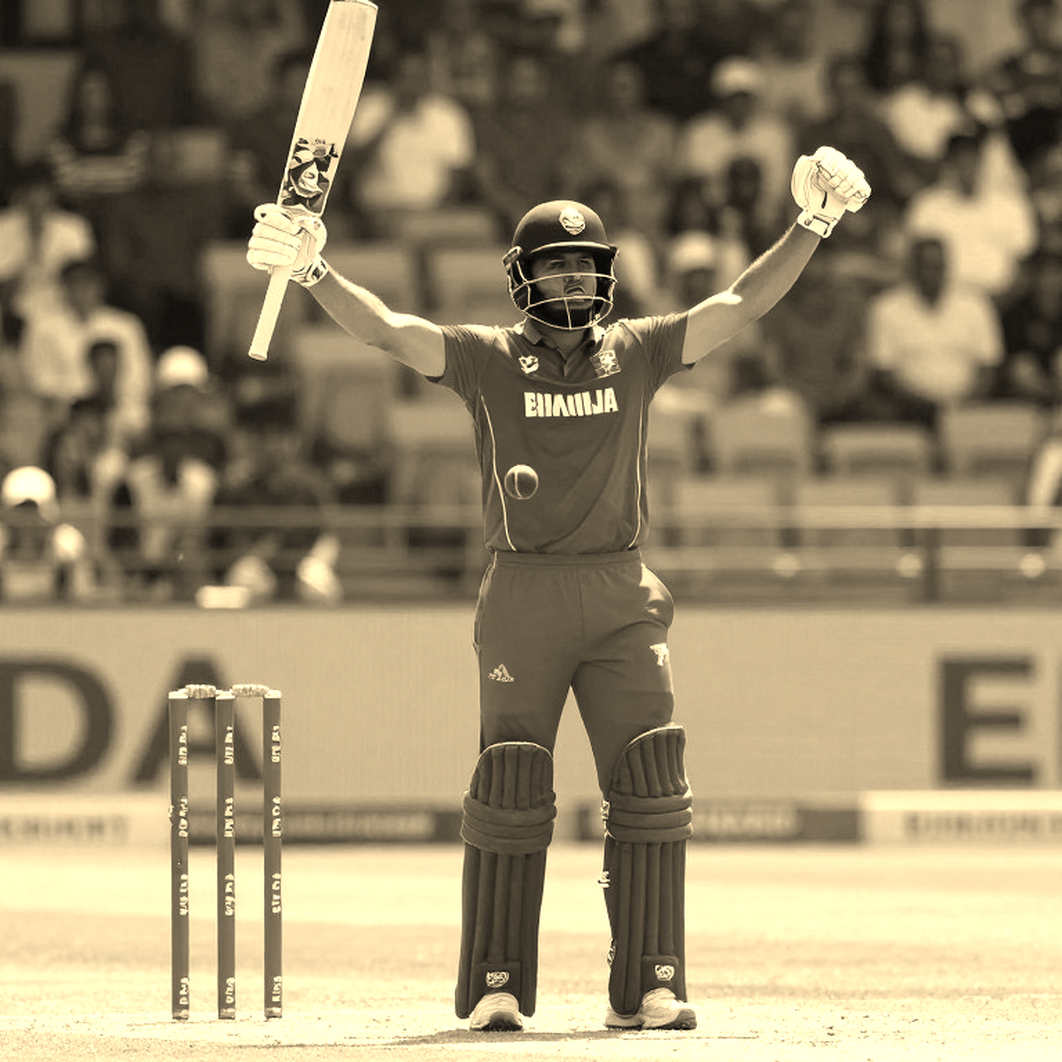
My notebook holds exactly three lines on this story. One: Abhishek Sharma praised Sanju Samson for making a sacrifice so that Vaibhav Sooryavanshi could have a batting position. Two: Abhishek's quote — "It's not easy to let go of batting position." Three: the same event described differently — Samson gave up his batting position for Sooryavanshi.
That is the entire asset. No date. No tournament. No scorecard. The source field reads "None." As a reporter, that is a red flag. As a cricket-market reporter, it is also worth saying plainly: the thing described in those three lines is one of the most expensive assets in the sport — a top-order batting slot.
The first six overs of a T20 innings are the powerplay, and during those six overs only two fielders may stand outside the 30-yard circle. That is written into the ICC's T20I playing conditions; it is not an opinion. A batter in the top three gets the new ball, the open field, and — most importantly — deliveries. Face 60 balls at a strike rate of 140 and you score 84. Face 30 balls at the same rate and you score 42. Identical skill, identical technique, half the number.
That is why "giving up a batting position" sounds sentimental but behaves like a balance sheet. A top-order slot is not an honour; it is a resource transfer, and in every transfer someone pays. The question is not whether Samson is generous. The question is whose account was debited, and whose name is on the receipt.
Context: What Was Said, and What Stayed Silent
Start with verification status, as I always do. Three claims, all traceable to a single unnamed input. No publication, no date, no byline. [Confidence: Low — source material unavailable]
Second: the competition is unstated. This could be India's T20 side or a franchise. My inclination is T20 international, because "giving up a batting position" is structurally white-ball language — in a Test you do not vacate an order slot, you walk out when a wicket falls. [Confidence: Medium] But it is an inference, not a fact, and the economics differ completely on either side of it: national selection politics on one side, auction and retention economics on the other.
Third, and most telling: no result, no score, no opponent, no venue, no date. This is not a match report. It is a personnel-decision story dressed in match-report clothing.
I learned to read football in a cricket newsroom: listen for the silence between overs. What speaks loudest in cricket journalism is usually what went unwritten. Here the silence sits in three places — the destination slot, the decision-maker, and the time frame.
One structural difference must be stated inside the piece, because importing football logic wholesale is how these stories go wrong. I come from a transfer desk where every move has three documents: the fee, the contract, the sell-on clause. Indian cricket has none of them in this situation. There is no free agency; the auction replaces negotiation. The BCCI bars its contracted men from overseas leagues, so player mobility is closed by design. What Samson did is therefore not a transfer in the football sense. It is a role reallocation inside a single employer.
And that is where the real insight sits. In football, a positional change opens a renegotiation — wage, bonus, contract length. In cricket, a role concession has no compensation mechanism at all. No clause, no appearance fee, no sell-on. The sacrifice runs one way.

Core: How a Slot Is Priced
In 2026, in a press box in Kochi, I measured India's under-17 midfield distances off broadcast footage because nobody had given me the numbers. At the time it felt absurd. Later it made sense: when data is withheld, you measure it yourself. In cricket the same method applies to the batting order. Balls faced is the real number. Runs, hundreds, averages, strike rates are all translations of it.
A batting position is a production schedule, not an honour roll. It determines which bowling you face, in which phase, for how many deliveries. In the powerplay you get the hard new ball and the two-fielder ring. Between overs seven and fifteen you get spin, and you need the sweep, the feet, the rotation of strike — a different technical set entirely. From sixteen to twenty the field opens again, but there is very little innings left.
Here is the first hidden cost: a batting-order change alters the input, but it gets read as a change in skill. A senior batting at five gets two overs, has to take risk on almost every ball, and if he fails twice the scorecard says his form has gone. The scorecard does not say he was never given the first ten overs. [Confidence: High — this is a structural property of T20, not a claim about any individual]
Now the compensation channel. The BCCI's central contracts are graded — A+, A, B, C — and grading rests on performance and selection. The internal criteria are not fully public, so I hold this at inference [Confidence: Medium], but the direction is plain: if your visible numbers fall, pressure builds on your contract tier. A batting-order decision therefore reaches a bank account two steps later, and cricket has no mechanism for reimbursing it.
In auction terms the picture sharpens. Franchises and bidding rooms price visible top-order output, because that is what the broadcast shows. A batter who steps down the order weakens his own auction case within a single cycle. In a market that settles in crores, that is a direct loss the team does not carry. Right-to-match cards and retention slabs do not protect such a player — they price him more strictly.
The Keeper-Batter Premium, and Why the Change Was Cheap
One thing nobody wrote into this story: a wicketkeeper-batter is a scarce dual role, and his place is secured by the gloves rather than the bat. If a team must move somebody down, the keeper is the cheapest candidate, because his selection is already guaranteed. [Confidence: Medium — assuming Samson kept wicket in this XI, which the source does not state]
That structural logic explains why the request landed where it did. But the logic serves the organisation, not the player. The change that is cheapest for team balance can be the most expensive for an individual career — and that asymmetry is the centre of the whole story.
There is a workload layer too. Gloves stress fingers, and add the mental load of a new entry point and the body has less room to absorb error. Injury history for all three players is absent from the source. Another empty field, and in this sport empty fields are expensive.
The Praise Mechanism: Who Said It, and Why That Person
Now the detail I weight most. The endorsement came from a teammate — not the captain, not the coach, not the selection panel, not a press release. That is not a small distinction.
An institutional voice becomes a statement, a statement becomes policy, and policy carries accountability. A peer's voice floats above all of it — it supplies warmth and binds nobody. If the arrangement is reversed next week, no one can say a promise was broken. Abhishek said nothing wrong for his own career; he said precisely what the moment required.
When everyone quotes the same source, I start counting the empty chairs. Here it is inverted — only one chair is occupied, and I am counting the rest. Where is the captain? Where is the coach? Why is the decision-maker unnamed? [Confidence: Medium-High — inference]
And the part of the quote that makes the story credible: "It's not easy." Praise alone would read hollow. The admission of cost is what gives it weight. But note how limited the admission is — nobody said what the new position is.
Risk Asymmetry: The Junior Gained Optionality, the Senior Lost It
A handshake is not a contract; it is a weather report for the deal. This arrangement is still a weather report — it describes the climate, not the terms. No stated duration, no performance condition, no review date. Where duration is undefined, the arrangement is not durable; it is deferred instability.
The asymmetry is simple. Sooryavanshi gains optionality: a top-order platform lifts his auction price, his endorsements, his profile. Samson loses optionality: the first-ten-overs guarantee that underpinned his statistical identity. If Sooryavanshi succeeds, Samson's route back depends on somebody else's failure rather than his own success. That is the least comfortable position in a career.
And there is a third batter whose name appears nowhere. Promoting one player pushes another down or out. This story is told about two people; the effect will land on three or four. [Confidence: Medium]
Where the Money Actually Lands
This is the part of the job I care about. Numbers do not become money directly; they travel a chain. Batting position sets balls faced. Balls faced set visible statistics. Visible statistics set selection security, auction bidding and endorsement value. Four steps — and the right to intervene exists only at the first one, and only with the team.
Samson's concession is therefore uncompensated exposure. In football an agent would sit down and reopen the contract. In cricket there is no table to sit at — the auction date is fixed, the bidding format is fixed, and the player's only argument is his scorecard.
For the organisation, meanwhile, the value is high at almost zero cost. A team-first story defuses selection controversy, markets a culture narrative, and makes the institution look generous. A sentimental story that costs the organisation nothing and bills one individual — that is the economics of this entire episode. [Confidence: Medium]
Contrarian: The Biggest Hole in the Sacrifice Story
First hole, and it is fundamental: nobody has said where Samson will bat now. A sacrifice without a destination is not a decision; it is a rumour with good manners. Moving from opener to No. 3 and moving from opener to No. 6 are entirely different deals with entirely different price tags. The first preserves some powerplay access; the second trades only in death overs. The source quietly skips this distinction, and it is the weakest joint in the whole item.
Second hole, and this is my actual thesis: the damage may be smaller than it looks — but it will show up in the wrong column.
Here is the mechanism. A batter lower down faces fewer deliveries, but he faces them in phases where strike rates rise: the field opens at the death, bowlers are forced to the yorker, and every risk pays more. So the demoted batter's average falls while his strike rate holds or even improves. [Confidence: Medium — based on general T20 structure]
And here is the market irony: at the auction table, strike rate is priced above average; at the selection table, average is priced above strike rate. Samson's commercial damage may be milder than assumed, while his selection damage could be sharper — because selection panels read averages, and averages are built out of balls faced. Nobody in this debate has put a finger on that gap.
Third hole, the least comfortable one. The story is being told in the grammar of generosity, when its structure resembles a directive. A senior does not usually vacate a premium slot unprompted; he is asked, and he agrees. That is the difference between a sacrifice and an instruction, and peer praise is the cheapest available device for blurring it. I am not claiming Samson resisted. I am claiming we have no idea why he agreed. [Confidence: Medium]
Fourth hole, and the most important. Any reader of this item will assume Sooryavanshi is ready for the top order. On what evidence? The source supplies no performance justification at all — no level of competition, no sample size, no conditions. Domestic and league brilliance is not international readiness, and this market has a long habit of putting both in the same bag. Conversion rates from age-group and league prominence are not high anywhere; publicity rates are.
Takeaway: The Next Three Team Sheets, and the Next Ten Innings
Watch the next three team sheets. If Samson's name returns to the top three, the sacrifice was a one-match experiment. If he stays at five or six, it was a policy nobody has yet announced. Both outcomes are information; neither was available in this report.
Second, look for a captain, coach or selector statement. A teammate's praise is a mood; institutional confirmation is a policy. The day an official says "this is a fixed-duration arrangement," the status of this story changes.
Third — and this is the bit I find genuinely interesting — Samson's numbers will dip over the next five to ten innings, and they will dip for structural reasons, not technical ones. When they dip, plenty of people will say he is finished. They will be wrong. And if a selector reads those same numbers at face value, one batter will pay the largest price of his career for a change he made for the team.
Fourth, blunt but true: if Sooryavanshi fails twice in the audition window, this same story inverts into "why was a proven senior moved for an unproven one?" Sacrifice narratives are built fast and convert into selection controversies faster. The only protection is a stated duration and a stated condition.
€100 million is a headline; the real number lives in clauses, dates, and who blinks first. There is no hundred million here, no fee, no medical. There is a slot that moved from one hand to another, and a quote that made it look graceful. The price is still real — in balls, in contract grades, and in the silence where the destination should have been written.
The next time a senior steps aside and we all start applauding, ask one question: what is his new position, who priced it, and whose name is on the bill?