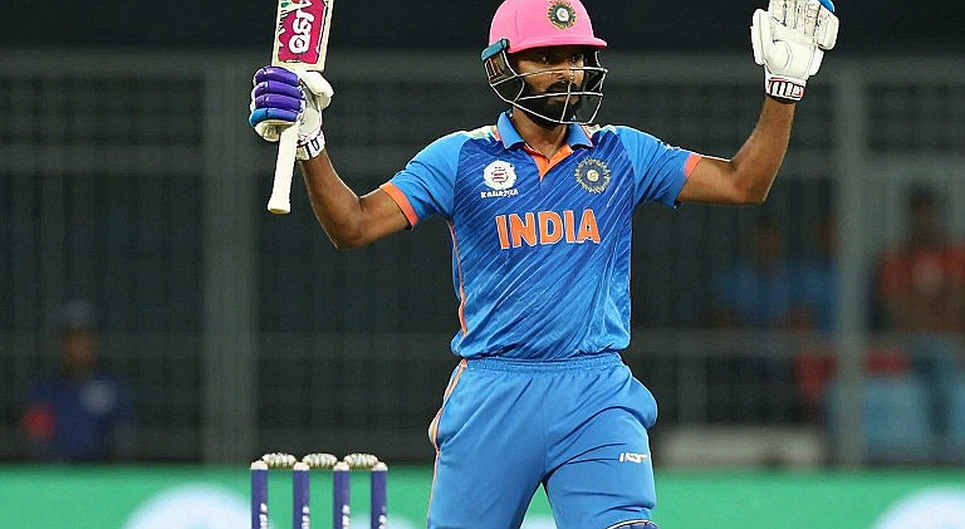
Three New Zealand Changes, One Unchanged India: The Number the Team Sheet Never Carried
**मुख्य उत्तर:** भारत ने टॉस जीतकर पहले गेंदबाज़ी चुनी और अपनी प्लेइंग XI अपरिवर्तित रखी, जबकि न्यूज़ीलैंड ने मैट हेनरी, लॉकी फर्ग्यूसन और नाथन स्मिथ को बाहर कर तीन बदलाव किए। इससे उसकी नई गेंद की विकेट-क्षमता और निचला बल्लेबाज़ी क्रम, दोनों एक साथ कमज़ोर पड़े। **मुख्य तथ्य:** - भारत की प्लेइंग XI अपरिवर्तित रही; टॉस जीतकर पहले गेंदबाज़ी का फ़ैसला भारत का था। - न्यूज़ीलैंड के तीनों बदलाव मुख्य रूप से तेज़ गेंदबाज़ी विभाग में केंद्रित रहे। - मैट हेनरी नई गेंद के स्विंग विशेषज्ञ हैं; लॉकी फर्ग्यूसन एक्सप्रेस पेस के गेंदबाज़ हैं। - नाथन स्मिथ सीम-गेंदबाज़ी करने वाले ऑलराउंडर हैं; उनके बाहर होने से निचला क्रम लंबा हुआ। - आने वाले तीन खिलाड़ियों के नाम, प्रारूप और वेन्यू मूल स्रोत में नहीं दिए गए हैं। **स्रोत:** मैच-पूर्व टीम शीट समाचार रिपोर्ट; प्रकाशन तिथि स्रोत में अपुष्ट, इसलिए कोई दिनांक नहीं दर्ज की गई है। प्रारूप और स्थल की पुष्टि से पहले सभी सामरिक निष्कर्ष अनंतिम माने जाएँ। **संबंधित प्रश्नोत्तर:** प्रश्न: क्या भारत ने टॉस जीतकर पहले गेंदबाज़ी चुनी या न्यूज़ीलैंड ने उसे पहले बल्लेबाज़ी के लिए भेजा? उत्तर: उपलब्ध टीम-न्यूज़ के अनुसार भारत पहले गेंदबाज़ी करेगा, जो टॉस जीतने वाले द्वारा लिए गए निर्णय का संकेत है, पर स्वतंत्र पुष्टि आवश्यक है। प्रश्न: न्यूज़ीलैंड के तीन बदलावों का सबसे बड़ा असर कहाँ पड़ेगा? उत्तर: पावरप्ले में, क्योंकि हेनरी और फर्ग्यूसन नई गेंद पर विकेट लेने की क्षमता को एक साथ कम करते हैं और स्मिथ के जाने से बल्लेबाज़ी की गहराई भी घटती है। प्रश्न: इस मामले में अगला निर्णायक संकेत क्या होगा? उत्तर: आने वाले तीन खिलाड़ियों के नाम और अगली टीम शीट में हेनरी-फर्ग्यूसन की वापसी, जो रोटेशन और चोट के बीच अंतर स्पष्ट करेगी।
The team sheet arrived with the toss, and it carried five pieces of information. India's XI is unchanged. India will bowl first. New Zealand have made three changes. Matt Henry and Lockie Ferguson are sitting out. Nathan Smith is also out. The sixth piece — the one that determines what this fixture actually means — was absent: the names of the three men coming in. The seventh, which may matter most of all, was missing too: which format this is, what the surface looks like, and where this match sits in a series or tournament.
I have read and filed thousands of team-news flashes across four decades. Their half-life is a few hours; the first ball usually kills them. Yet inside those five or six lines, a selection philosophy occasionally shows itself — the kind that sets the direction for the next twelve months. This time it showed, and it showed incomplete.
My falsification route is clean. If the three incoming players turn out to be spinners or a spin-bowling all-rounder, the anxiety this piece is built on dissolves — this becomes a coherent, conditions-first plan rather than a structural downgrade. Second route: if Henry returns for the very next fixture, this was a single-match workload call and says nothing about intent. Either outcome changes my conclusion, and I will change it.
Method box — what is verified and what is not
Verified (present in source): India's XI unchanged; India bowling first; three New Zealand changes; Henry, Ferguson and Smith omitted; the claim that these omissions were 'expected'.
Inferred (from the Laws and cricket convention): India won the toss and chose to bowl. That is India's decision, not New Zealand's being sent in — a legally different scenario with a different meaning.
Unconfirmed (absent from source): format, venue, pitch report, match stage, identities of the three replacements, India's full XI, New Zealand's batting order, publication date.
The open model worked because it admitted what it could not see. Here the model is seeing very little, and it should say so loudly.
Context: two decisions compressed into one headline
'Unchanged India bowl' is a single sentence carrying two independent decisions. 'Unchanged' is a selection call. 'Bowl' is a toss call. The first tells us whether the management trusts a settled combination or simply had no forcing injury to react to. The second tells us the toss winner preferred to chase rather than being sent in. In modern limited-overs cricket, a toss winner bowling first usually reflects one of two reads: that the surface will ease under lights and dew will help the chasing side, or that the captain has a repeatable chase model he trusts. Which applies here cannot be resolved without venue data. What can be resolved is that India chose — they were not pushed.
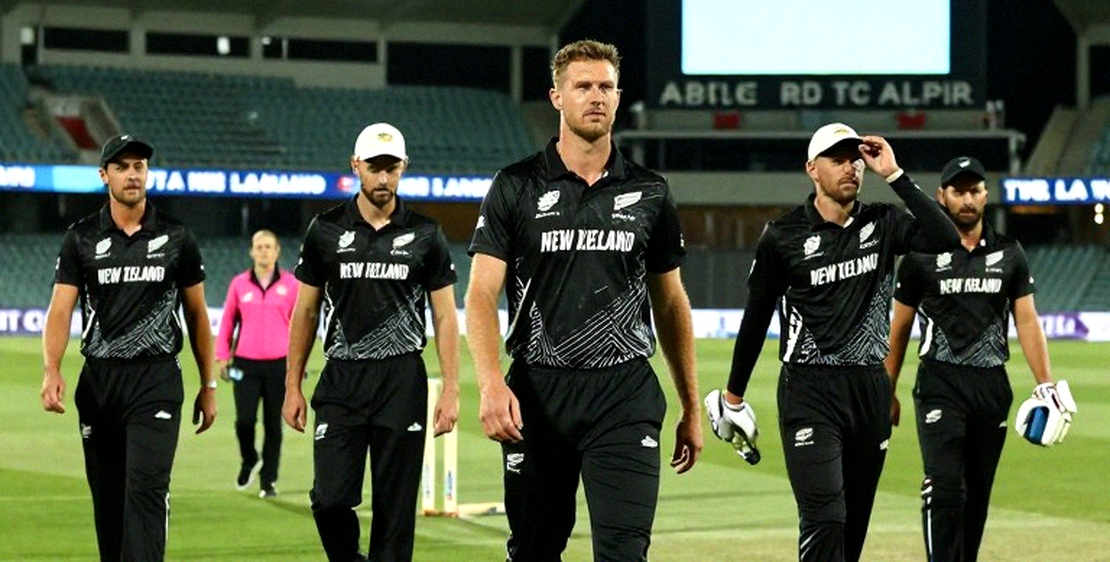
New Zealand's three changes, by contrast, are concentrated in one department: pace. This is not rotation for its own sake, it is a re-profiled attack. Removing all three simultaneously takes away the new-ball swing threat, the express-pace intimidation, and the seam-bowling all-rounder's batting cushion at seven or eight. One move, three costs.
Core: three names, three different prices
Matt Henry is the highest-cost omission, and the cost is role scarcity rather than raw numbers. He is the specialist new-ball swing bowler — a skill built on pitching the ball up and moving it both ways, not on pace. His absence changes when New Zealand can take wickets, not merely how many. In limited-overs cricket the powerplay wicket is the single most valuable event for the fielding side, because it sets the tempo of the middle overs and forces the opposition's plan into pressure. Removing Henry and Ferguson in one stroke attacks New Zealand's own capacity to generate that event.
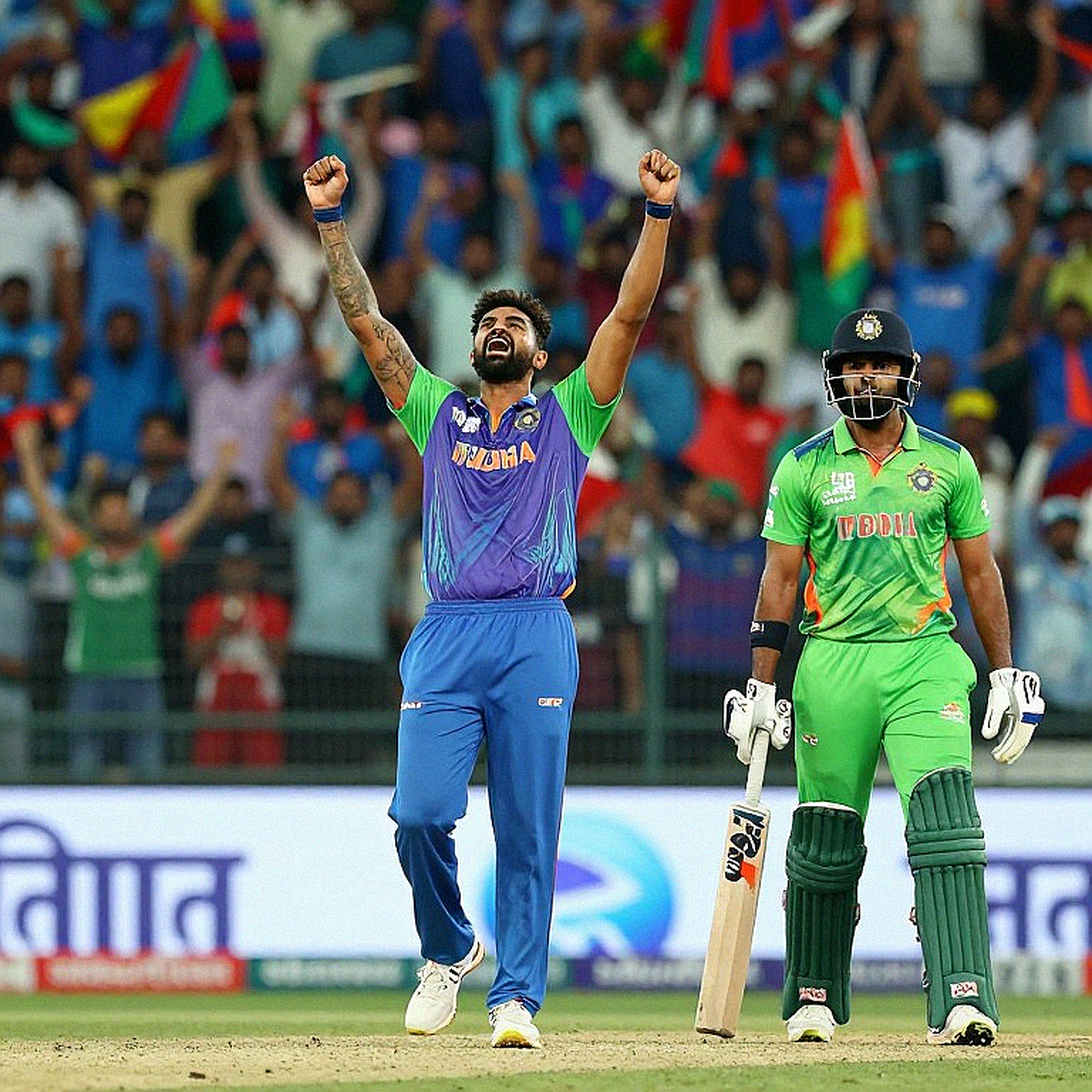
Lockie Ferguson's absence should be read through durability, not form. Express pace carries a well-documented soft-tissue and bone-stress load, and intermittent omission across a congested calendar is the standard management pattern for that bowler category. The source's word 'expected' supports a pre-planned load call rather than a drop. One honest caveat: boards under-disclose niggles in team-news items. If Ferguson is missing from the next sheet too, 'rotation' becomes 'injury' and my risk rating moves.
Nathan Smith's omission has the least-discussed cost, and it sits in the batting. A seam-bowling all-rounder going out means New Zealand must either play a specialist bowler at eight — lengthening the tail — or field a seventh batter and lose a bowling option. That is a structural trade, not a like-for-like swap. And it does not only affect the bowling innings: a longer tail reduces the licence the top order can take late on. Removing one all-rounder weakens two departments at once.
India's unchanged XI should be read as a depth statement rather than merely a stability statement. Repeating an identical XI in an era of multi-format congestion and managed workloads is unusual, and it usually means the first-choice combination is both fit and clearly separated from the bench — the hallmark of a top-tier squad. It also creates the match's defining asymmetry: India can plan phase by phase against a known structure, while New Zealand must plan around an attack it has not fielded together in this configuration.
The pivotal unresolved variable
The entire weight of this analysis rests on one missing datum. If the three slots are filled by spinners or spin-bowling all-rounders, this is a coherent conditions call and standing down three seamers is cleverness, not weakness. If they are like-for-like seamers, it is pure workload management and the new-ball downgrade stands exactly as stated. Those two explanations have opposite implications for New Zealand's competitiveness: one says the team adjusted to conditions, the other says the team discounted the fixture.
No conclusion here is safe until the format is verified. If this is a Test, the justification for standing down three quicks is entirely different and every powerplay-based inference in this piece becomes inapplicable. That is why the format is flagged as unconfirmed at the top rather than buried in a parenthesis. A dataset that does not publish its version is not fit for comparison.
Cohort size: New Zealand's real constraint
I write this from old ground. In 2026 I was part of setting up the BCA–Mafatlal Bowling Scheme, where Abey Kuruvilla, Paras Mhambrey, Sairaj Bahutule, Salil Ankola and Nilesh Kulkarni trained under Frank Tyson's supervision. That experience taught one permanent lesson: producing a fast bowler is hard; producing a queue of them is harder. The pipeline's size is the binding constraint, not talent identification.
India or Australia can lose three seamers at once and keep their structure intact, because the next rank is populated. For New Zealand, losing three pace options simultaneously forces a rebuild of the attack's shape and the tail's length in the same afternoon. That is a long-run structural feature, and it surfaces precisely in dense tournament windows, when it hurts most. That is a decade's story, not a match story.
Contrarian: 'expected' is the weakest link in the chain
The most analytically valuable sentence in the source is that the omissions were expected. Ask the professional question: expected by whom, and on what basis? Unsourced, the word does two jobs at once. It softens the reader's reaction to a significant competitive decision — fine, we knew. And it implies that someone held the information before the toss. That second function is the real story.
In 2026, as cricket editor at The Indian Express while the match-fixing story broke, I learned that lesson at the highest price: team composition is market-sensitive data, and uneven dissemination of it is a distinct problem. There is no suggestion of wrongdoing here and I am making no allegation. But when a reporter can label omissions 'expected' before the toss, the question of which channel carried that information — and what that channel gains — deserves the same scrutiny as the result. A clean dashboard is not evidence; it is a question wearing a suit.
Now my own trap, stated openly. Being the market skeptic is a reputation, and reputations want feeding. Calling every rotation a weakened XI is the lazy version of my own method. If this is a dry, scuffed surface and New Zealand have picked three spinners, it may be the smartest call of the week and half my worry turns to dust. That is why this is version 1.0. The full XI makes it 1.1, and if it must, I will publish the correction that says my first reading was wrong.
One more thing will be decided by outcome rather than analysis, and outcome is not evidence. If India reach 80 without loss in the first ten overs, the verdict will be that New Zealand conceded the match at the toss. If India are 30 for two, the same three changes become a clever read of the surface. The facts are identical in both cases: Henry, Ferguson and Smith did not play. The quality of the decision should be judged against a pitch report we were never given, not against the scoreline.
Venue and crowd are the variables that were not even listed, and they move outcomes the most. In 2026, working from my flat in Hyderabad, I pulled every match of the UAE IPL — sixty games across Dubai, Abu Dhabi and Sharjah — plus the ISL season played behind closed doors in Goa. Home advantage on points per game collapsed into statistical noise at neutral venues, while Sharjah's short boundaries pushed scoring about 1.9 runs per ball above Dubai's. I counted the empty seats and found a variable no spreadsheet could hold. The same lesson applies here: at a neutral venue, India bowling first is a dew-and-lights calculation; in India, it is a spin-control calculation; in New Zealand, standing down three seamers is close to self-harm. One team sheet, three different stories.
The U-17 data taught me that a model without a story is just arithmetic. In 2026, alone in a Guwahati hotel room, I built a possession-value model that ranked Rhian Brewster the tournament's most efficient shooter two rounds before the final — and I could say that only because I published the weights and let people attack them. Here I have no weights, because there is nothing measurable to weigh. So I am doing what I did then: writing what is visible and naming what is not.
Takeaway: what to watch next
First, the identities of the three replacements — they will swing the risk rating to low or high in one move, with no middle setting. Second, India's wicket column in the first six to ten overs; zero or one wicket at a fast rate confirms the new-ball downgrade empirically. Third, the next team sheet: an immediate Henry-Ferguson return settles rotation versus injury. Fourth, New Zealand's batting order — a specialist bowler at eight with no all-rounder cover raises collapse variance. Fifth, and largest, confirmation of format and venue, without which every tactical conclusion here is provisional.
And a sixth signal that will not come from one match but from the whole window: how often frontline fast bowlers are stood down from international fixtures. If that frequency rises, the question stops being what New Zealand did in this game and becomes who is paying for the franchise calendar, and who is keeping the ledger. The day audiences conclude that every second international is somebody's managed outing, we will have plenty of data and very little contest. Are we counting that moment?