
The Empty File: Indian Football's Ledger That Was Never Written
**मुख्य उत्तर (≤60 शब्द):** भारतीय फुटबॉल की सबसे बड़ी कमी प्रतिभा नहीं, दर्ज रिकॉर्ड है। 2017 अंडर-17 विश्व कप के बाद भी खिलाड़ियों के मिनट, अनुबंध और अकादमी के फैसले केंद्रीय रूप से दर्ज नहीं होते, इसलिए हर मूल्यांकन अधूरा रह जाता है और बहस मिथकों पर टिक जाती है। **मुख्य तथ्य:** - 2017 अंडर-17 विश्व कप में भारत तीनों ग्रुप मैच हारा — 0-3 यूएसए, 1-2 कोलंबिया, 0-4 घाना। - फाइनल 28 अक्टूबर 2017 को साल्ट लेक स्टेडियम में; दर्शक 66,684, इंग्लैंड ने स्पेन को 5-2 से हराया। - फीफा ने अगस्त 2022 में एआईएफएफ को निलंबित किया; प्रतिबंध 26 अगस्त 2022 को हटा। - 1997 फेडरेशन कप सेमीफाइनल में 1,31,781 दर्शक दर्ज — टूर्नामेंट अब बंद हो चुका है। - 1948 लंदन ओलंपिक में भारत फ्रांस से 1-2 हारा; 1950 विश्व कप से नाम वापस लिया गया। **स्रोत:** लेखक का 2017-2025 मैच-डे लेजर तथा फीफा/एआईएफएफ सार्वजनिक अभिलेख; उद्धृत तिथियाँ — 28 अक्टूबर 2017, 26 अगस्त 2022। **संबंधित प्रश्न-उत्तर:** प्रश्न: भारत ने 2017 अंडर-17 विश्व कप में पहला गोल किसके पैर से किया? उत्तर: जीकसन सिंह थौनाओजम ने 9 अक्टूबर 2017 को कोलंबिया के खिलाफ, फीफा टूर्नामेंट में भारत का पहला गोल किया। प्रश्न: अगस्त 2022 का एआईएफएफ निलंबन कितने दिन चला? उत्तर: बारह दिन; फीफा ने प्रतिबंध 26 अगस्त 2022 को हटाया, जिससे अंडर-17 महिला विश्व कप का आयोजन बचा रहा। प्रश्न: इस रिपोर्ट का मुख्य तथ्यात्मक आधार क्या है? उत्तर: दर्ज मैच मिनट, टीम शीट और सार्वजनिक दस्तावेज़ — स्मृति या अनुमान नहीं।
The brief arrived on a Tuesday morning. Nine sections, forty fields, a question attached to each one — tactics and technique, club finance and the transfer market, results and the opinion cycle, a team's place in the league's architecture, rules and governance, the dressing room, the risk matrix, media noise, and how a single event transmits through the industry. The frame was complete. The subject was empty. Where the title should have been, N/A. Where the source should have been, N/A. Zero entries on the list of facts. Only one field was populated: Domain — football.

I have spent fifteen years excavating football's paper trails, and I have learned one thing in this trade: when a story arrives as nothing but a skeleton, the gravest error is to mistake the skeleton for evidence. A handsome table with forty cells persuades a reader that something has been checked. That persuasion is dangerous. A report in which every cell reads 'insufficient information, cannot assess' says nothing about any club; it says only that the report was sent out empty-handed.
But before I closed that empty file, I noted something else. In its risk section sat the sentence that matters most to my profession — the absence of a mention is not proof that a thing is clean. Unknown and innocent are different words. I repeat that sentence every three months when writing about Indian football, because almost every argument here rests on that single mistake.
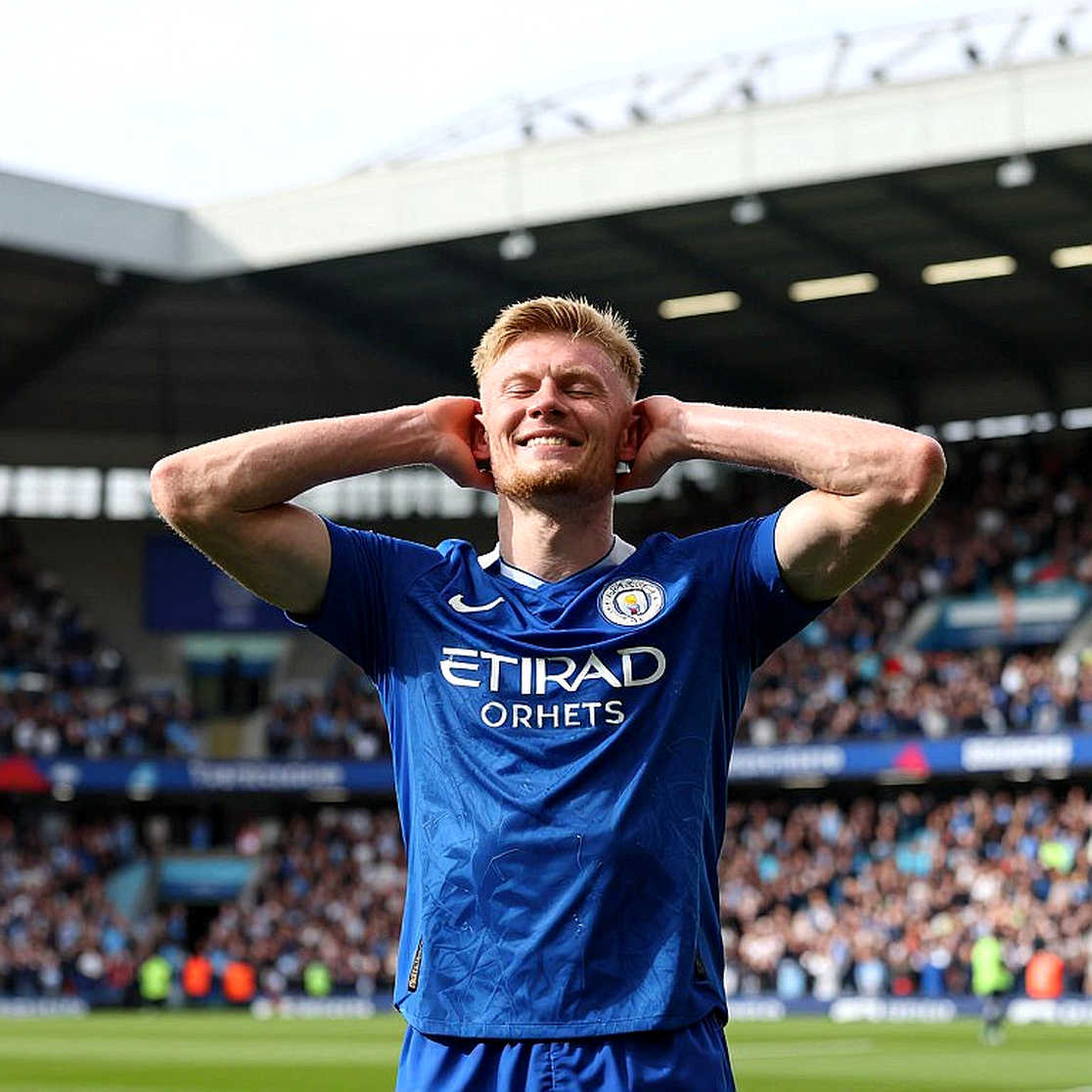
October 2026, and I am still writing down what the scoreboard forgot.
That year I was twenty-one and flew to Kolkata from Liverpool to work in the media operations team at Salt Lake for the FIFA Under-17 World Cup. I worked twenty-one match days. I was on the tribune for the final — England 5-2 Spain before 66,684, still the loudest crowd I have stood inside. India lost all three group games: 0-3 to the USA in New Delhi, then 1-2 to Colombia, where Jeakson Singh Thounaojam scored India's first goal at a FIFA tournament, then 0-4 to Ghana.
Nobody around me was recording the boys who never made the highlights. I started. A simple ledger — birth year, position, the club they were at, and minutes. Three columns per player. At first I thought it was a stringer's habit; later I understood it was an attempt to fill the largest gap in the country's football history. India has no central, public, year-on-year record of age-group football. What exists is scattered — in a state association's file, on a tournament team sheet, in a coach's diary.
So I changed my source. Not the federation's press release, but the team sheet. A release tells you who is in camp; a team sheet tells you who played. The first is intent, the second is fact. In journalism that difference is everything.
Eight years on, what does that ledger show? At least half the names made their way through I-League benches, state leagues, trials in Delhi, and quiet retirements. A few went up — Suresh Singh Wangjam, Amarjit Singh Kiyam, Jeakson, Dheeraj Singh Moirangthem, Rahul K.P. — and they went up because a club gave them minutes and a coach gave them permission to make mistakes. The rest did not go up, and I have to say this plainly: their failure to rise was not their deficiency but the deficiency of the decisions taken around them by adults. Players' choices get recorded; clubs', academies' and federations' do not. That asymmetry breaks the whole story.
I did not have to travel to another city to learn this. In November 2026, aged twenty-four, that same ledger got me my first staff contract — video and player-development assistant at SC East Bengal, in the club's centenary year and its first ISL season. Twenty games, all inside the Goa bio-bubble, no spectators. Robbie Fowler's side finished ninth of eleven with 17 points.
In December two academy staff were furloughed. I quietly absorbed their liaison work, unpaid. The academy list, the parents' phone numbers, the school holiday dates — all of it was work that appeared in nobody's job description.
In the January window I argued for minutes for a nineteen-year-old forward. The club signed a thirty-one-year-old foreign recruit instead. The kid played four minutes all season. Four minutes. At nineteen, four minutes means zero, because the next window takes his name off the list and puts someone else's on it.
After that season I began building a one-page 'pathway audit'. No adjectives. On one side, every academy player's minutes; on the other, every first-team signing's minutes. Two columns, and the gap between them. That page was never published, but it became the skeleton of everything I wrote afterwards. I also learned that you keep your own arguments off the record until the people you are protecting have left the building. That advice is in no style guide. It was in the Goa bubble.
Since then I have kept another drawer, one I have several times believed closed — the federation file. In August 2026 it opened again. FIFA suspended the All India Football Federation over third-party interference, eight weeks before an Under-17 Women's World Cup due to be staged in Bhubaneswar, Goa and Navi Mumbai. Twelve days of suspension. Lifted on 26 August 2026.
During those twelve days I was working on that tournament's legacy programme, and I did what nobody else had time to chase — re-confirmed forty host-family placements and school visits by phone. That never became news. The news was that India had been 'punished from abroad'.
I found the suspension file in a drawer I thought I had closed. And what it made clear is still unfinished business: August 2026 was not a story of foreign punishment. It was a domestic governance story that should be read in sequence — Supreme Court orders, normalisation committee minutes, FIFA correspondence. The court's action produced the suspension; it was not the cause of it. The distinction looks small, but the entire public argument turned the wrong way on it.

And that file never closed. It was only shelved. In November 2026, when Morocco reached a World Cup semi-final, I wrote six thousand words on a federation with no money but one coherent pathway. Having no money and having no pathway are two entirely different diseases. India suffers from the second and uses the first as an alibi.
Now the part I actually do this job for — scoreboard archaeology. Reconstructing the records Indian football never kept. The 2026 Federation Cup semi-final drew 1,31,781, a figure that survives today, but not in any official Indian football archive — in newspaper clippings and the tournament's own file. The Federation Cup itself no longer exists. A tournament that produced that crowd was shut down without leaving a digital record.
Sitting in London gives me one advantage: the 2026 barefoot Olympic squad can be seen from a second angle, through British newspaper morgues and Olympic records. India lost 1-2 to France at Loftus Road. And the 2026 World Cup withdrawal is still told as a story about being refused permission to play barefoot, when the documents speak of travel costs, squad selection and preparation. Myth is comfortable. The file is uncomfortable. I choose the file.
Here I have to raise a question against my own method. In ten years I have assembled so many empty cells, closed files and unavailable figures that every piece starts ending in the same place — a complaint about the architecture. That is a dangerous habit, because a broken structure sometimes produces the right things anyway.
So let me write it plainly: absence is not evidence of decline. That is the same error as the empty brief, only reversed. Just as no mention of a charge does not make a party innocent, no surviving record of an event does not mean the event did not happen or that the player failed. Both times the outcome is identical — you mistake the frame for the evidence.
Which is why I promise myself, in every long piece, to log one living win, because the archive keeps confirming decline and every excavation drifts to the same ending. Punjab FC's arrival in the ISL, and Mohammedan Sporting — founded in 1891 — reaching the top flight for the first time: those two dates I do not leave out of anything, because omitting them is dishonest both to the facts and to the reader.
And from London it is easy to draw a verdict from the open-pyramid comparison — set England's open system beside India's closed decade and pronounce. I will not. I will keep it as a question, not a ruling, and where I could not verify something with someone actually on the ground, I will say in the text that I could not. Justice seen from a distance is usually just distance.
So what finally came out of that empty brief? A work order. Because when a framework returns 'insufficient information' in every cell, it is really telling you what it needs. I need the same things. I do not need a headline — I need a date. I do not need an opinion — I need minutes. I do not need 'talented' — I need birth year, position, club and contract end date. The day Indian football starts publishing those four things, half the arguments in this country will end by themselves, because the fuel will be gone.
You have to dig past the transfer fee to find the person it moved. He was fourteen in my notebook and twenty-three in the headlines. Nobody recorded the nine years in between. Those nine years are the entire story.
Next time an Under-17 player scores, look at the scoreboard, then ask it a question it cannot answer — how many minutes has he played in the last twelve months? If you get no answer, the problem is not the boy. And the day you do get an answer, Indian football's real reform will have begun — not on a stage, but in a file.